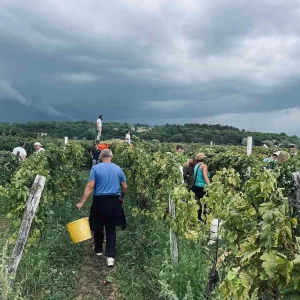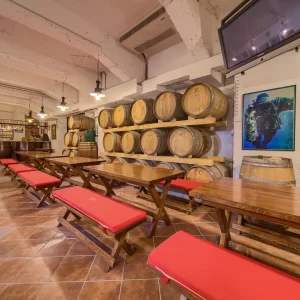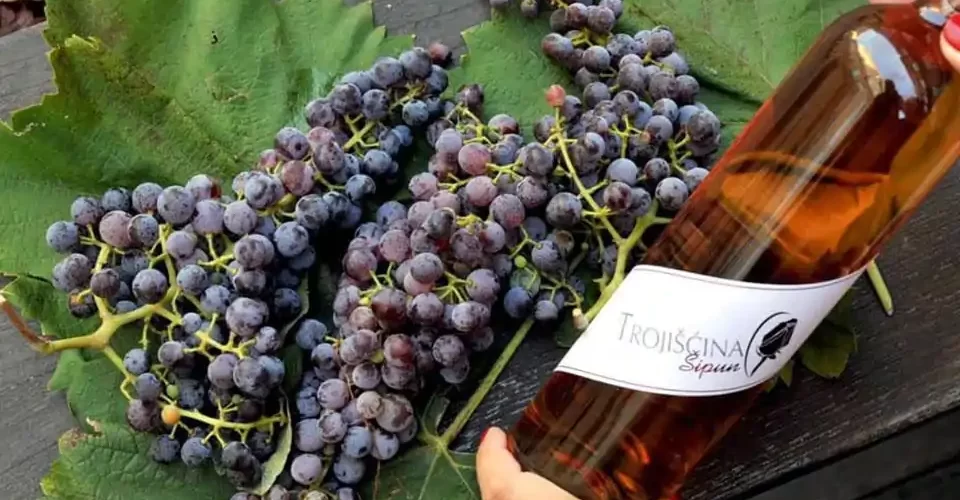
The Šipun Winery? Is it the winemaker's last name, a part of Vrbnik, or something else? Šipun is an old Croatian word for a wild rose flower – a rosehip flower. For most, the enigmatic name of the winery also hides what the winery and its owner, Ivica Dobrinčić, are best known for, which are the indigenous grape varieties: trojišćina – an old coastal red grape variety that is almost extinct, from which they make a fantastic rosé, and the sansigot variety – a red grape that has long been a resident of all coastal islands, mostly associated with the island of Susak. Dobrinčić is a lover of nursery farming, which has enabled the revitalization of old, almost extinct native grape varieties. The Šipun winery's Žlahtina has been praised and awarded, and they have also produced a sparkling wine – Maličić – from the Žlahtina variety! Although the Šipun winery can truly be said to be a small, family winery, they are confidently moving towards supplementing their product range in the direction of producing the aforementioned sparkling wine from Žlahtina, but also from Trojišćina – sparkling wine Vila, also Muscat and the red blend Kapitul from the introduced varieties of Cabernet Sauvignon, Merlot and Petit Verdot. In addition to the aforementioned, they also produce technologically different varieties of wine, namely macerated wines – Hlam 9, and some new ones are in preparation. Activities to detect old, almost extinct local varieties continue – two almost extinct local varieties are currently in the revitalization process.
OBRT ŠIPUN – for winemaking and nursery farming
A: Šipun 16, 51516 Vrbnik
T: +385 91 508 70 27
And: sipun.vrbnik@gmail.com
W: www.sipun-wine.com
F: @ŠIPUN Winery
AND: @winery_sipun
1. What do you think are the advantages and disadvantages of a family wine business?
The advantages are great, but honestly, the disadvantages of such a lifestyle are just as great. While you feel the uncompromising commitment and availability of your family members, you also feel an enormous responsibility towards the sacrifice that such a commitment requires, which ranges from losing privacy to putting the family's financial capital on the line to support the family wine business. But as long as at the end of the day we all feel that what we are investing in is valuable and meaningful, we always come to the conclusion that in life without sacrifice – nothing.
2. Journalists have called you the Indiana Jones of wine. Are you proud of that "title"?
Initially, if I have already received this „title“, it makes me happy and laugh – it is a nice name for me who is making my way in boots through the bushes and overgrown, almost disappeared vineyards of our region in search of the last few buds of some almost forgotten and almost lost variety. I am not sure that it is comparable to the adventures of Indiana Jones, but in the world of my interest it arouses an incredible adrenaline – so maybe there are some similarities there. From some varieties I used to get a dozen thin buds rolled up in a small piece of damp cloth that did not seem to promise much. From those ten buds I would only be able to produce two or three vine cuttings and so on from year to year, five to ten pieces. But the knowledge that this is how a „plant life“ survives and is saved truly brings satisfaction and excitement.
3. You are the only producer of wine made from the Trojišćina variety. What is the potential of this variety?
Whenever something is unique, original, rare, it certainly has value. My goal has always been to find and propagate those varieties that are on the verge of survival, and the greater their threat, the more important the motive to save them, even though the road is more difficult. For now, three-leaf clover has been planted in three locations with grafts from our nursery. Its potential as a rose for still, sparkling and also macerated wine is great. Its rescue from complete disappearance is a kind of ode to the Susak-Cres-Lošinj archipelago – especially Susak, which, due to the diversity and number of varieties that existed on it, is justifiably called a floating vineyard. It is also an ode to the peasants who painstakingly planted and cultivated the vine, and this is especially important when we look at the current situation in the context of the displacement of the local population and the survival of only a few vineyards. But there is hope – three-leaf clover and Sansigot are being planted in small ways on Susak.
4. Carefully selected wine names and interesting labels make you stand out.
Šipun is the name of our brand, company, district, and today the street where our headquarters are located. A little less than fifty years ago, that part of Vrbnik was full of rosehip bushes whose flowers are rosehips. The fantasy names of individual wines and labels are based on Vrbnik stories and history, and the short verses are in the Vrbnik Čakavian dialect. Maličić is a fantasy character who lived in the attic of a stone house in the oldest Vrbnik street – Roč, and he was lively, mischievous, and a testy person. And while the kolonbari were dancing on the Gelbok, the fairies seduced the Vrbnik shepherds while they were tending their sheep. The chapters are parts of the Vrbnik Statute from 1388, a unique document, the second statute written in the Glagolitic script in the Croatian language. Hlam is a famous local toponym, and the fragrance and sweetness of Muscat is symbolized on the label by the šenpreiva ka vinčić wild yellows. The goal of this approach was to send Vrbnik postcards everywhere where our wines are drunk – as the time for sending postcards has passed, we wanted the labels to become new in this way. hartulins.
5. You also snatched the Sansigot variety from oblivion. What kind of job was that?
I found the scions for the Sansigota grafts in Puntarska Krasa and on the island of Susak. With Mr. Žic from Punat, then in his late 80s, I visited his vineyards in Puntarska Krasa and he used a stick that he leaned on as he walked to tap each vine and tell me what variety it was. I marked the vine, a bit skeptically, but later in the vegetation it turned out that he had "guessed" each variety, even though the vines all looked the same in the winter. That is the famous devotion of the farmers to their vineyard. Incidentally, this method of planting in Puntarska Krasa – in each box (a small area surrounded on all sides by large dry stone walls and a larger mass of stones) two or three vines without reinforcement – was called by the people of Vrbnik in the Punat style. On the island of Susak, my scout in 2002 was the priest from Vrbnik, Mate Žic. Pop Mate put me in touch with local people, especially Mr. Anton Tarabokija, with whom I traveled all over Susak searching for and marking abandoned vines. It is important to mention that the vineyards from which we took vine material 20 years ago no longer exist, and if the vines had not been taken then, we might not have the Sansigot and Trojišćina varieties today. It is interesting that a full 15 years passed from the discovery of the last Sansigot buds in those old vineyards to the bottling of the first bottle of Sansigot. My wife forbade me from further research projects like this, but despite that, Trojišćina is there today, and in a few years, I hope, another forgotten indigenous wine variety should see the light of day. I believe that she will also be glad that I did not listen to her!
6. You also worked on the plantation of the main vineyard on Krk.
Almost 20 years ago, a collection vineyard of indigenous varieties of Kvarner and the Croatian Littoral was established in Risika near Vrbnik on the Martinčić family farm. I participated in initiating and designing the project in question, in finding the breeding stock, and in lobbying for the project in Primorje-Gorski Kotar County through the then Center for Mediterranean Agriculture. The evaluation and vinification are carried out by the Faculty of Agriculture, University of Zagreb. For the collection, which today consists of more than 20 varieties, breeding stock of the varieties Žlahtina, Brajdica Bijela, Vrbić, Sansigot, Žumić, Volarovo, Plavac, Sušić, Ošljevina, Rušljin, Bilan, Jarbola, Trojišćina, Plavčina, Rožeta, Susac, Debejan Crni, Katarina Rikiki, Beli Debejan, Bašćan, Kamenina were collected.
7. Kapitul stands out from your range of wines made from indigenous varieties as a Bordeaux blend.
Kapitul is a red wine, a blend of three grape varieties: Cabernet Sauvignon (70 %), Merlot (25 %) and Petit Verdot (5 %). The vineyards are located near Vrbnik, in the Hlam location. The technological processing of this wine is characterized by aging for 2 years in oak barrique barrels and maturing in bottles for another 2 years.
Although the concept of our winery is indigenous grape varieties, we decided to produce a Bordeaux blend from introduced varieties somewhat on a whim. My friends often teased me about producing wines from some local grape varieties, and since these wines were unknown to them, they always told me that I could tell them whatever I wanted and put whatever I wanted in the bottle. That is how Kapitul was created, which they could then compare to any other red blend blend as a known "formula". Today, the appreciation and awareness of the importance and value of indigenous varieties is much greater, so my friends' thoughts have changed. Although our goal is not to increase the amount of grapes from introduced varieties or to introduce such new ones, Kapitul remains a "test" of the Hlam location and as proof that so-called great wines comparable to many others in this category anywhere in the world can be produced in this area.
The respected wine expert Mr. Saša Špiranec ranked Kapitul among three candidates for entry into the class of great Croatian red wines, which we, as a small family winery, are particularly proud of.
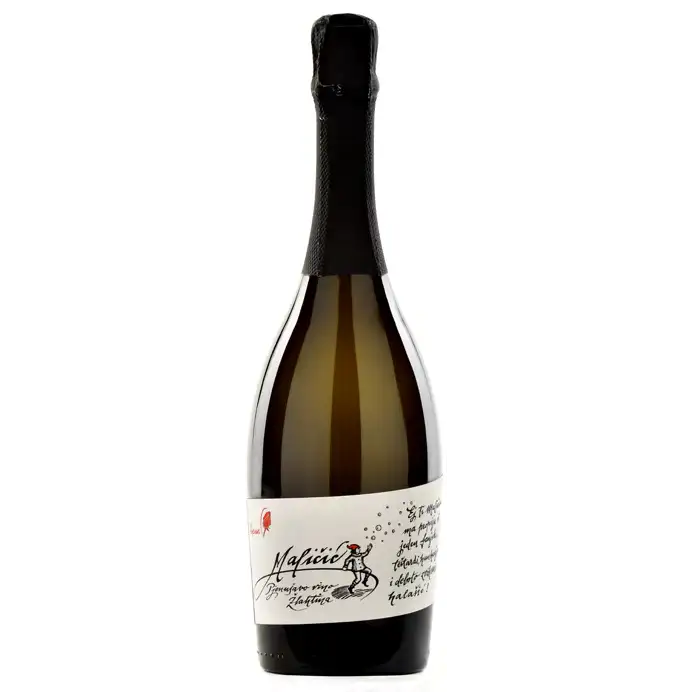
Grape variety: Žlahtina white
Category: ZOI Croatian Littoral, premium sparkling wine
Vineyards: Krk
Vineyard: Pod Val
Vineyard age: 20 years
Vineyard altitude: 90 m
Vineyard location: Vrbničko polje
Soil composition: alluvial-diluvian soil on flysch
Vinification: Charmat method
Maturation: in bottle
Alcohol content: 11 % vol.
Total acid: 7 g/L
Unfermented sugar: 3.4 g/L, extra brut
Bottle size: 0.75 liter
Serving temperature: 6 °C
Wine description: Straw color with greenish reflections, crystal clarity and fine perlage. On the nose, intense fruity-floral aromas of green apple, peach, white flowers, citrus notes of lemon, mint and yeast are felt. Light, fresh and very drinkable sparkling wine with a wonderfully balanced perlage, freshness and fruitiness.
Pairing: As an aperitif, with shellfish, carpaccio, Adriatic shrimp and crabs.
Aging potential: 2 years

Grape variety: red tricolor
Category: ZOI Croatian Littoral, premium sparkling wine
Vineyards: Krk
Vineyard: Hlam
Vineyard age: 15 years
Vineyard altitude: 225 meters
Vineyard location: Hlam
Soil composition: skeletoid red soil
Vinification: Charmat method
Maturation: in bottle
Alcohol content: 12 % vol.
Total acidity: 6.3 g/L
Unfermented sugar: 2 g/L, extra brut
Bottle size: 0.75 liter
Serving temperature: 6 °C
Wine description: Lighter dew color, small intense bubbles, pronounced aroma of raspberry, grapefruit and strawberry. Lighter body and very refreshing.
Pairing: As an aperitif wine with fresh fruit – strawberries and melons, with fresh cheeses and with fish carpaccio.
Aging potential: 2 years
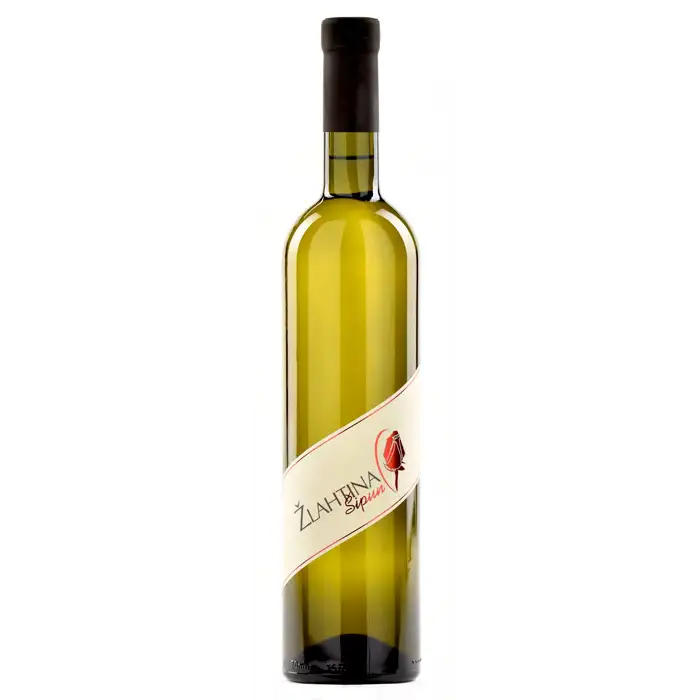
Grape variety: Žlahtina bijela Category: ZOI Croatian Littoral, quality wine KZP
Vineyards: Krk
Vineyard: Vrbnik Field
Vineyard age: 5-40 years
Vineyard altitude: 90 m
Vineyard location: Vrbničko polje
Soil composition: alluvial-diluvian soil on flysch
Vinification: stainless steel, wood - combination
Maturation: in bottle
Alcohol content: 11.50 % vol.
Total acidity: 5.2 g/L
Unfermented sugar: 1.9 g/L, dry
Bottle size: 0.75 liter
Serving temperature: 10-12 °C
Wine description: The wine is straw-yellow in color, with a delicate fresh fruity aroma dominated by green apple, pear, lemon and white flowers. It has an elegant structure, a fresh and very pleasant salty taste, and freshness is reflected in the aftertaste.
Food pairing: Pairs well with white meat, white fish, shellfish and generally lighter Mediterranean dishes or as an aperitif. Also served with fresh, young cheeses.
Aging potential: 3 years
Awards: Decanter silver, Sabatina gold, Vinistra silver
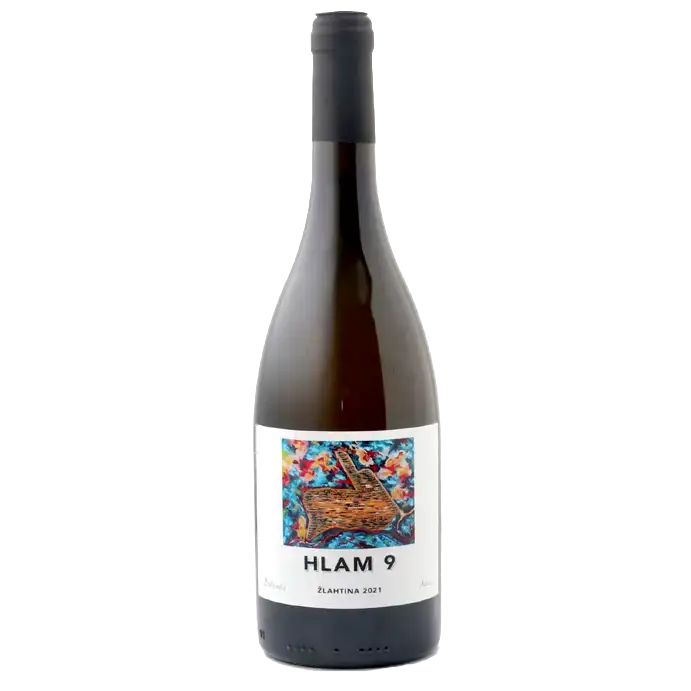
Grape variety: Žlahtina white
Category: ZOI Croatian Littoral, quality wine KZP
Vineyards: Krk
Vineyard: Hlam
Vineyard age: 15 years
Vineyard altitude: 225 m
Vineyard location: Hlam
Soil composition: skeletoid soil
Vinification: stainless steel
Maturation: in stainless steel and in bottle
Alcohol content: 11.6 % vol.
Total acidity: 5.6 g/L
Unfermented sugar: 1.2 g/L
Bottle size: 0.75 liter
Serving temperature: 14 °C
Wine description: The wine has a deeper straw color, intense fine fruit aromas such as ripe apple, pear and peach intertwined with aromas of Mediterranean herbs and white flowers. The taste is fresh, lighter in body, smooth texture, complex, the finish is marked by pleasant bitterness.
Pairing: with cold and hot appetizers, grilled fish and white meat
Aging potential: longer aging potential
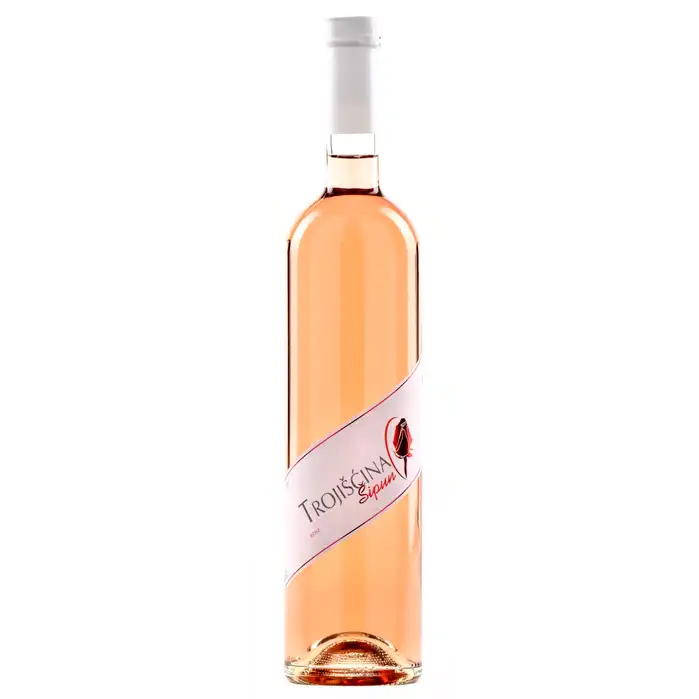
Grape variety: red tricolor Category: ZOI Croatian Littoral, quality wine KZP
Vineyards: Krk
Vineyard: Hlam
Vineyard age: 15 years
Vineyard altitude: 225 m
Vineyard location: Hlam
Soil composition: skeletoid red soil
Vinification: stainless steel
Maturation: in bottle
Alcohol content: 11.5 % vol.
Total acidity: 5.6 g/L
Unfermented sugar: 1.8 g/L, dry
Bottle size: 0.75 liter
Serving temperature: 10-12 °C
Wine description: The wine is a vibrant, lighter pink color, with an open aroma dominated by a fruity-floral aromatic profile with pronounced notes of raspberry, sour cherry and red grapefruit. On the palate it is dry and soft, with a lighter body and elegant structure. The aroma profile perceived on the nose is reflected in the aftertaste. Very fresh and fruity in the finish.
Pairing: As an aperitif wine, with shellfish, prosciutto, seafood salads, carpaccio
from fish.
Aging potential: 2 years
Awards: best rosé wine of Istria and Kvarner "Dobra hrana", Vinistra silver
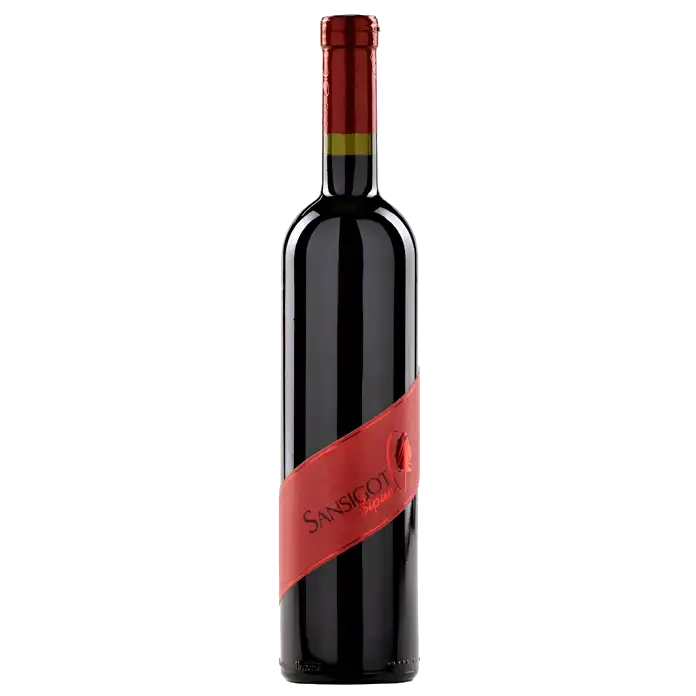
Grape variety: Sansigot
Category: ZOI Croatian Littoral, quality wine KZP
Vineyards: Krk
Vineyard: Risika, Hlam
Vineyard age: 15-20 years
Vineyard altitude: 80 m and 225 m
Vineyard location: Risika, Hlam
Soil composition: red soil and skeletoid red soil
Vinification: stainless steel, wood
Maturation: wood, bottle
Alcohol content: 12 % vol.
Total acidity: 5.8 g/L
Unfermented sugar: 1.2 g/L, dry
Bottle size: 0.75 liter
Serving temperature: 14-16 °C
Wine description: The wine is a purple ruby-red color. It is characterized by aromas of blackberry,
cherries, pepper and Mediterranean herbs – thyme and bay leaf. On the second nose, subtle notes of mocha and sweet spices open up. It has an elegant body, a fresh, juicy and soft taste. It is dry and warm in taste, the tannins are fine-grained and slightly astringent. The wine has a very pleasant and elegant structure. The fruitiness and freshness are reflected in the finish.
Pairing: With seafood risottos, oily fish, game, various cheeses, prosciutto.
Aging potential: 12 years
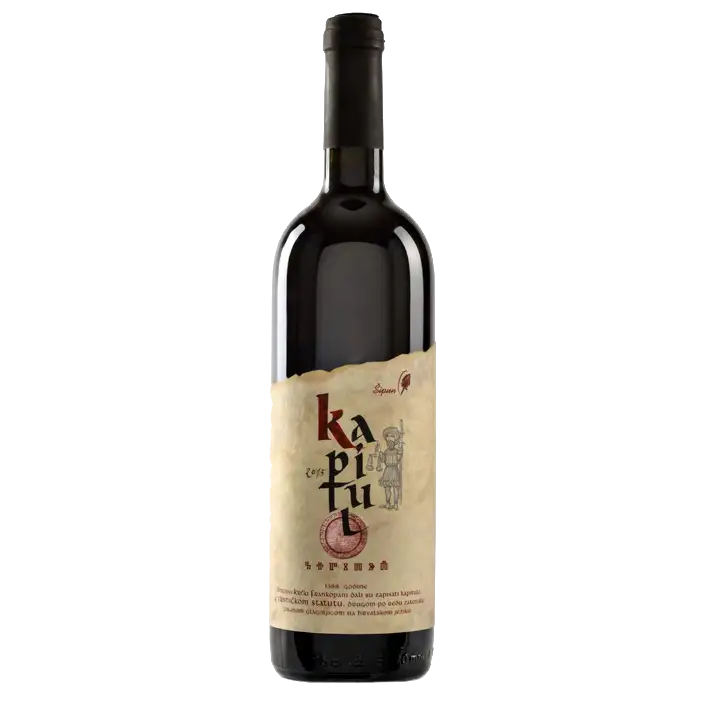
Grape variety: cabernet sauvignon, merlot, petit verdot
Category: ZOI Hrvatsko primorje, premium wine KZP
Vineyards: Krk
Vineyard: Hlam
Vineyard age: 15 years
Vineyard altitude: 225 m
Vineyard location: Hlam
Soil composition: skeletoid red soil
Vinification: stainless steel, wood
Maturation: in wood and bottle
Alcohol content: 13.5% vol.
Total acidity: 6.1 g/L
Unfermented sugar: 2.4 g/L, dry
Bottle size: 0.75 liter
Serving temperature: 18 °C
Wine description: The wine is very dense, impenetrable ruby color with garnet reflections, slow
and narrow arches noticeable on the glass wall. The aroma is intense, clean and very complex.
The first nose opens with syrupy fruity aromas of blackberry, blackcurrant, juniper and jelly.
of forest fruits, dried Mediterranean herbs, balsamic notes, granite and wood. Then come the notes of sweet spices, licorice, leather, cedar and tobacco. The taste is multi-layered and concentrated, the tannins are ripe. You can feel the weight on the
Medium-bodied, with a taste dominated by fruitiness and freshness, which is brilliantly integrated into an elegant structure. The aromas perceived on the nose return, accompanied by a herbal note of mint with a very long finish.
Pairing: With spicier, more mature cheeses, red meat and game.
Aging potential: 20 years
Awards: Decanter silver, Vinistra silver
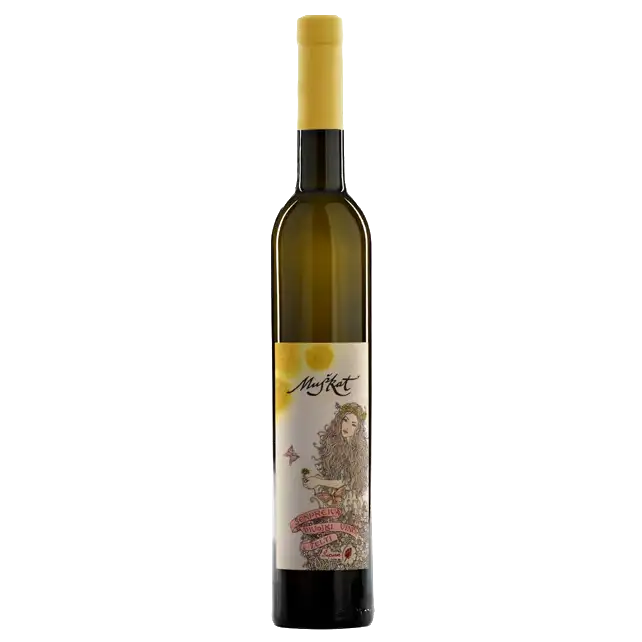
Grape variety: white muscat 85%, yellow muscat 15%
Category: ZOI Primorska Croatia, quality wine KZP
Vineyards: Krk
Vineyard: Hlam
Vineyard age: 15 years
Vineyard altitude: 225 m
Vineyard location: Hlam
Soil composition: skeletoid red soil
Vinification: stainless steel
Maturation: in bottle
Alcohol content: 12 % vol.
Total acidity: 6.2 g/L
Unfermented sugar: 38 g/L, semi-sweet
Bottle size: 0.50 liter
Serving temperature: 10-12 °C
Wine description: Lighter straw-yellow in color, very refined aroma, intense muscat aromas and cocktails of freshly squeezed fruit such as peach, green apple, pear, exotic aromas of lychee and light citrus notes. The wine is semi-dry, lighter in body, very pleasantly fresh and the fruitiness is reflected in the finish.
Pairing: As a dessert wine, with desserts.
Aging potential: 2 years