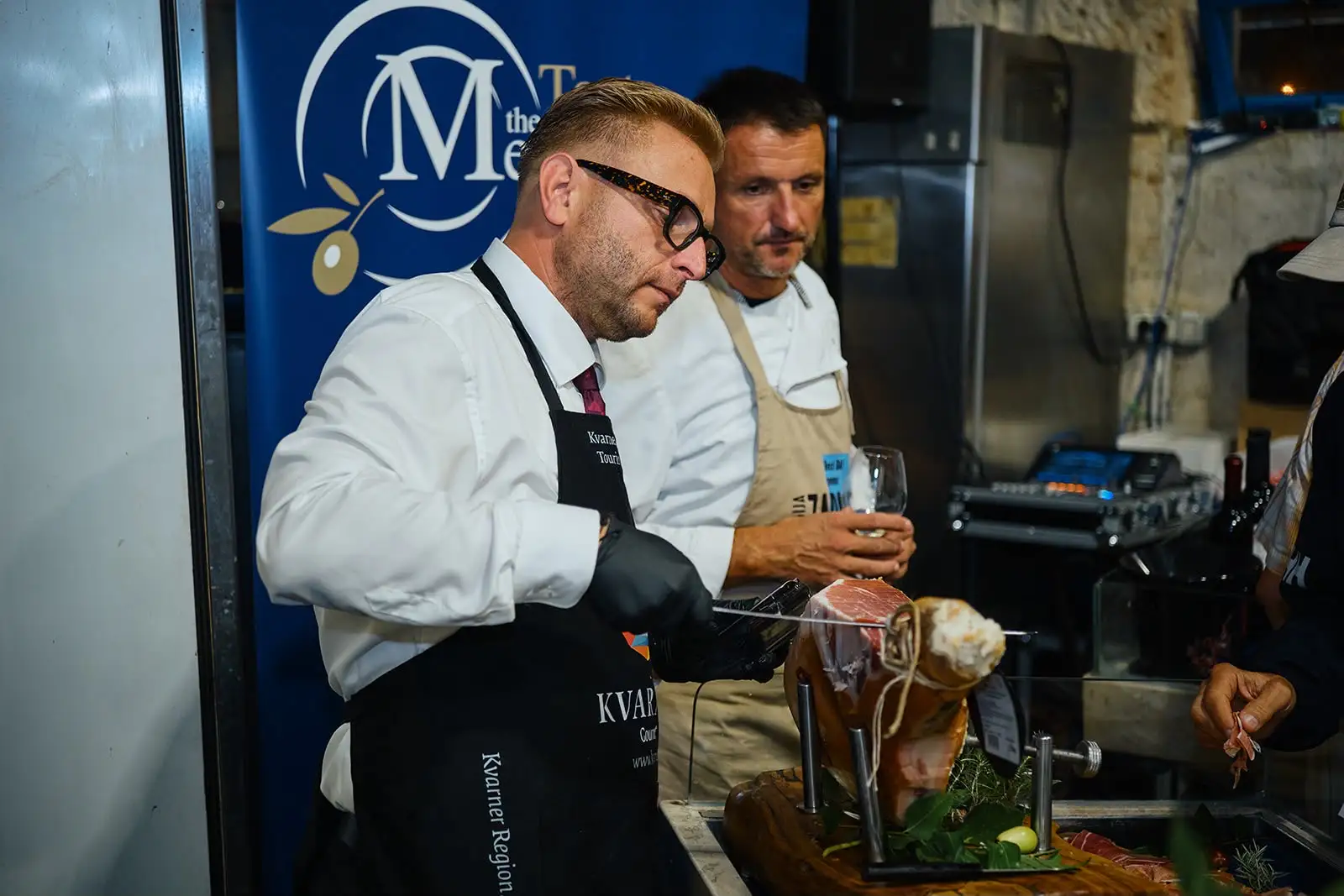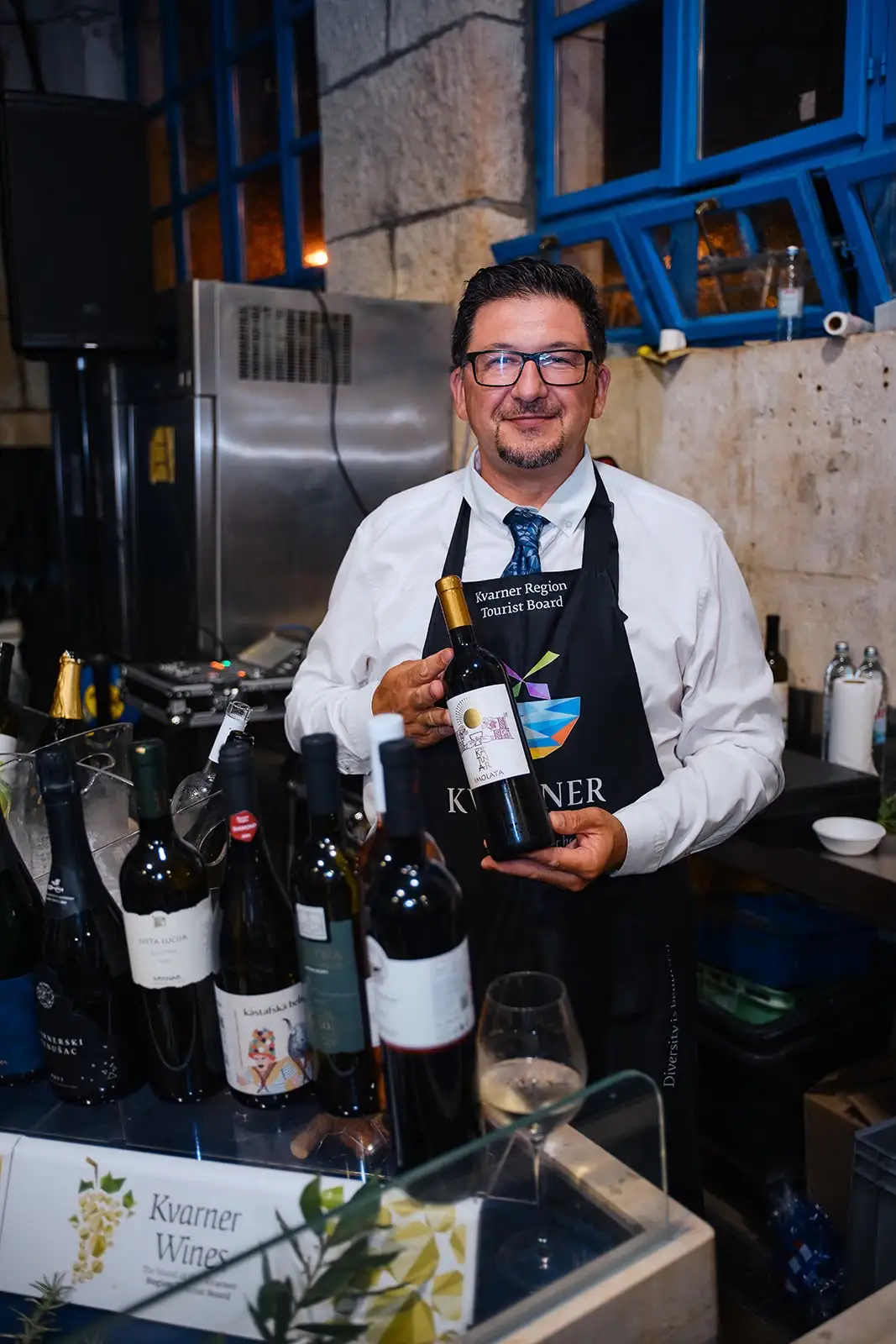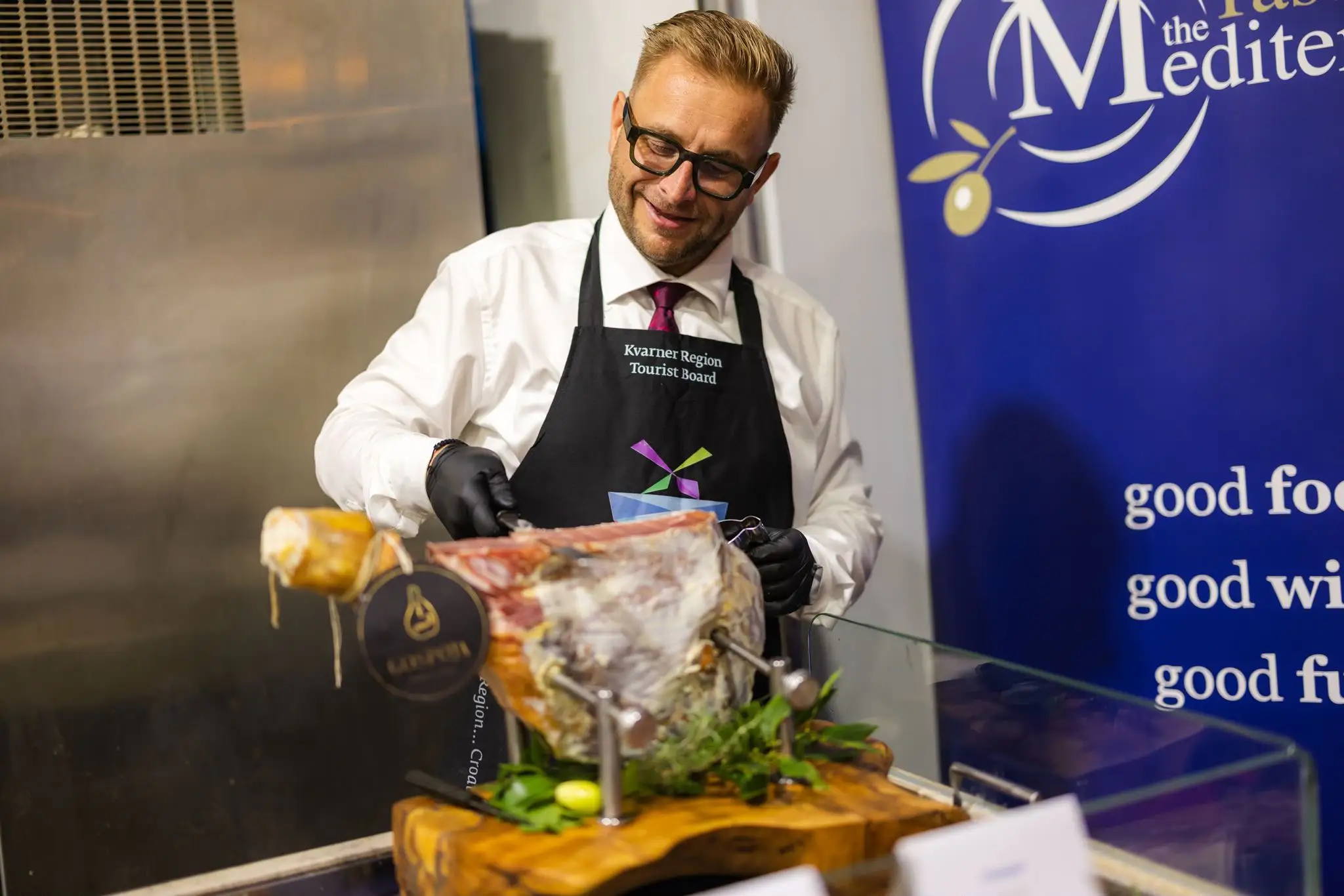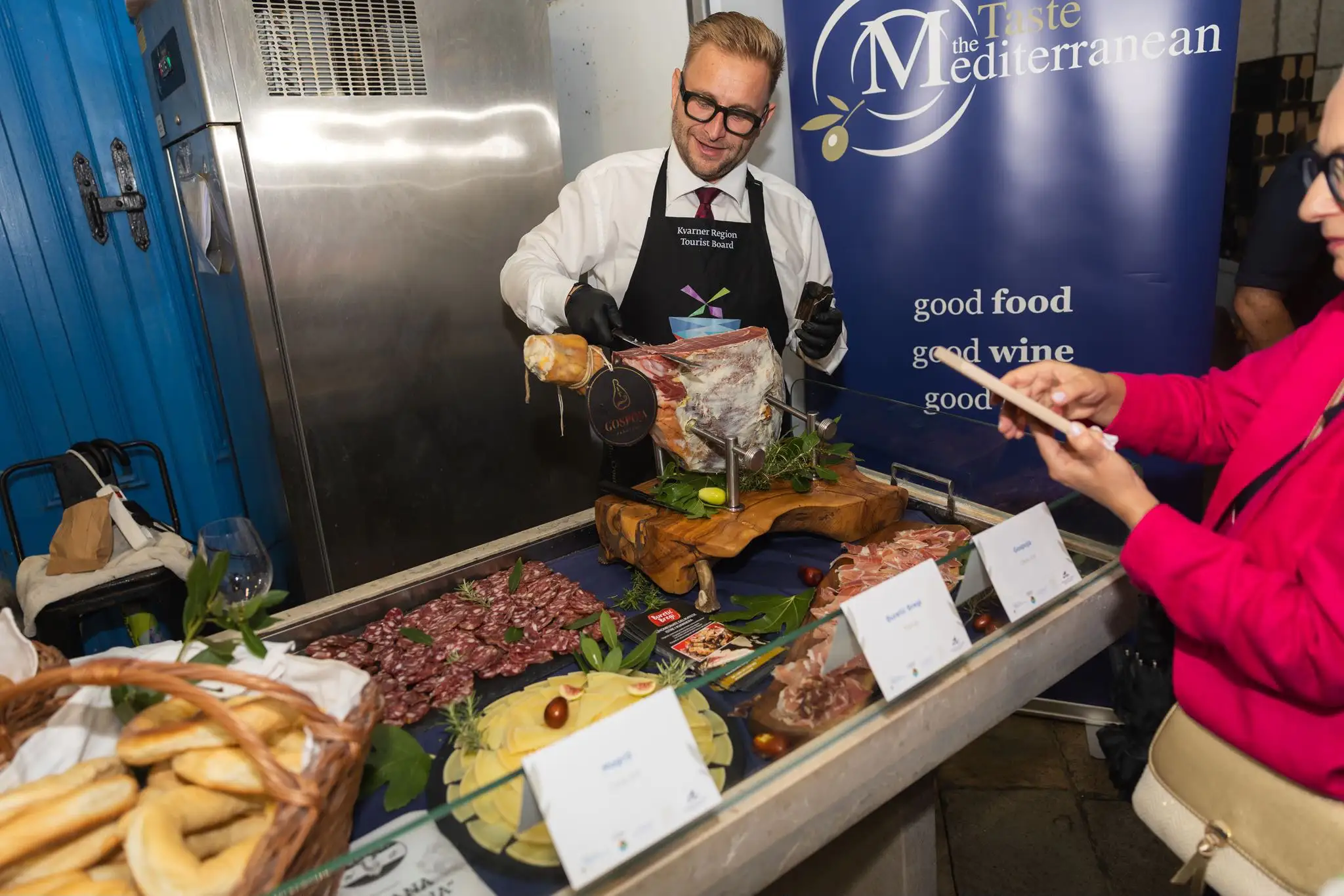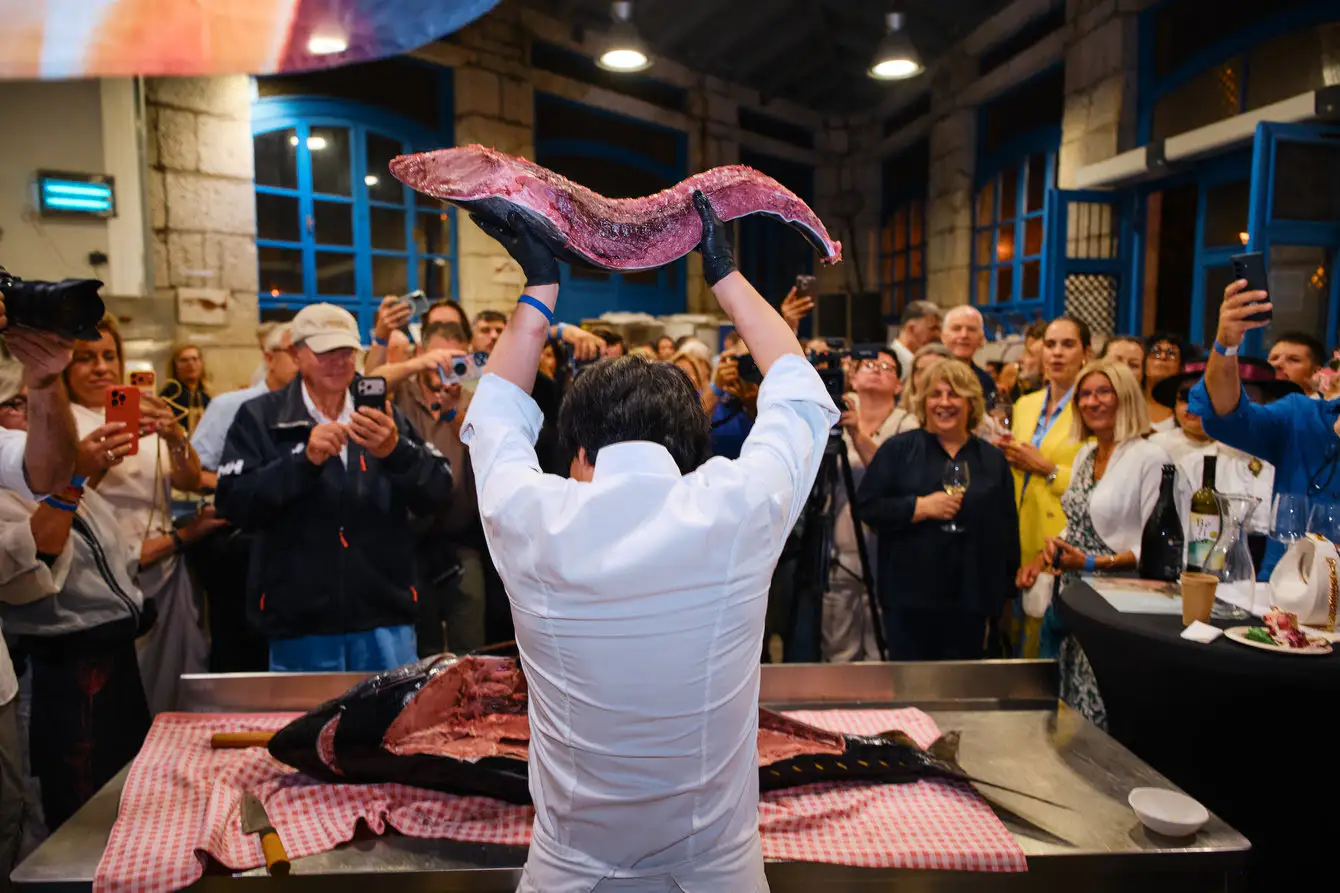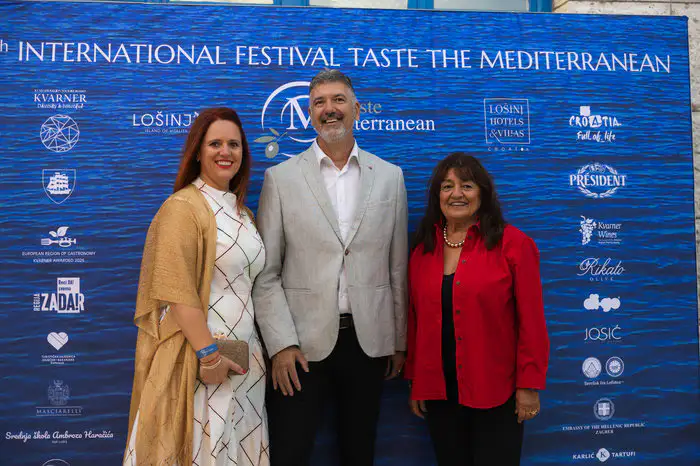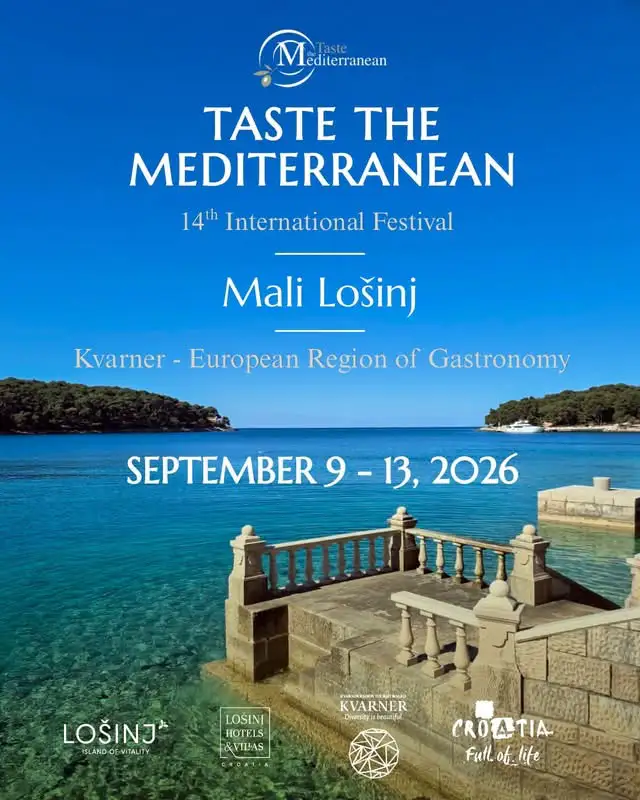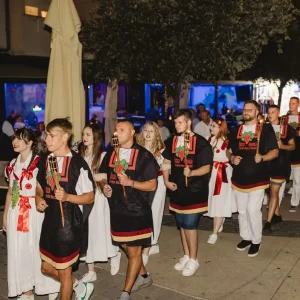
From September 9 to 13, Mali Lošinj was the meeting place of top chefs, winemakers, the gastronomic profession and producers at the 14th edition of the international festival Taste the Mediterranean. For the Kvarner Wines Association, the festival was much more than another presentation of wine - it was a practical demonstration of our vision of Kvarner as a connected wine and gastronomic destination.
Wine. Food. Local producers. Chefs. Restaurants. Tourism. Education. International cooperation.
When we present them together, we are no longer promoting individual products. We are promoting Kvarner.
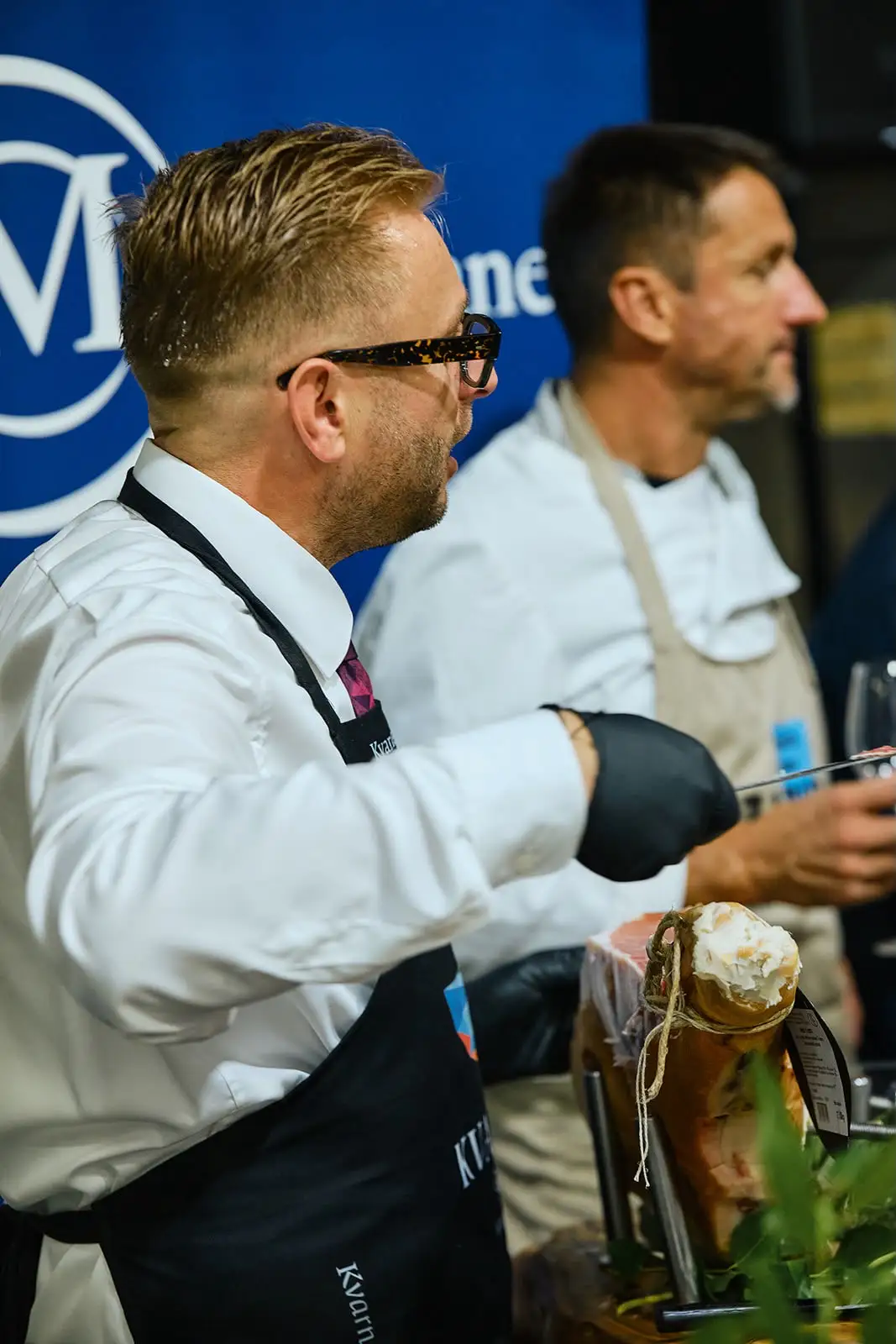
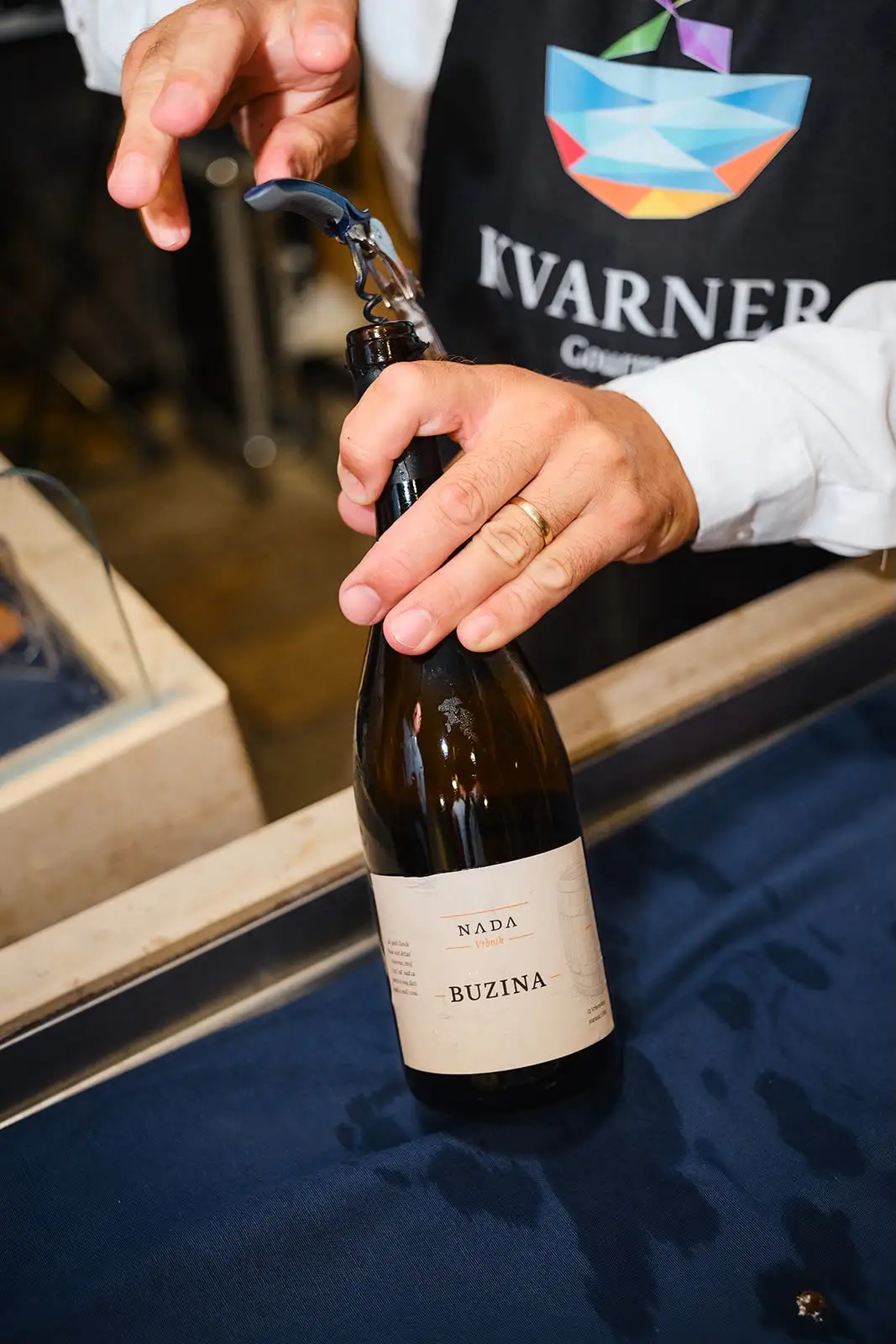
At the festival's grand opening in the historic Ribarnica in Mali Lošinj, Kvarner Wines presented wines from all of its member producers, with a special emphasis on indigenous varieties. Žlahtina was presented across a wide range of styles – sparkling, young and fresh wines, aged interpretations and prosecco. Kastavska belica in sparkling and still interpretations, trojišćina and sansigot were also presented.
In one place, you could taste what Kvarner Wines systematically communicates to the market: our greatest value is not quantity, but identity. Indigenous varieties, small producers, different terroirs of the island, coast and hinterland, and wines that cannot simply be copied from another region.
Kvarner is a boutique wine region - an area of autochthonous varieties, Mediterranean flavors and a special way of life. Indigenous grapes. Mediterranean flavors. The Kvarner Way.
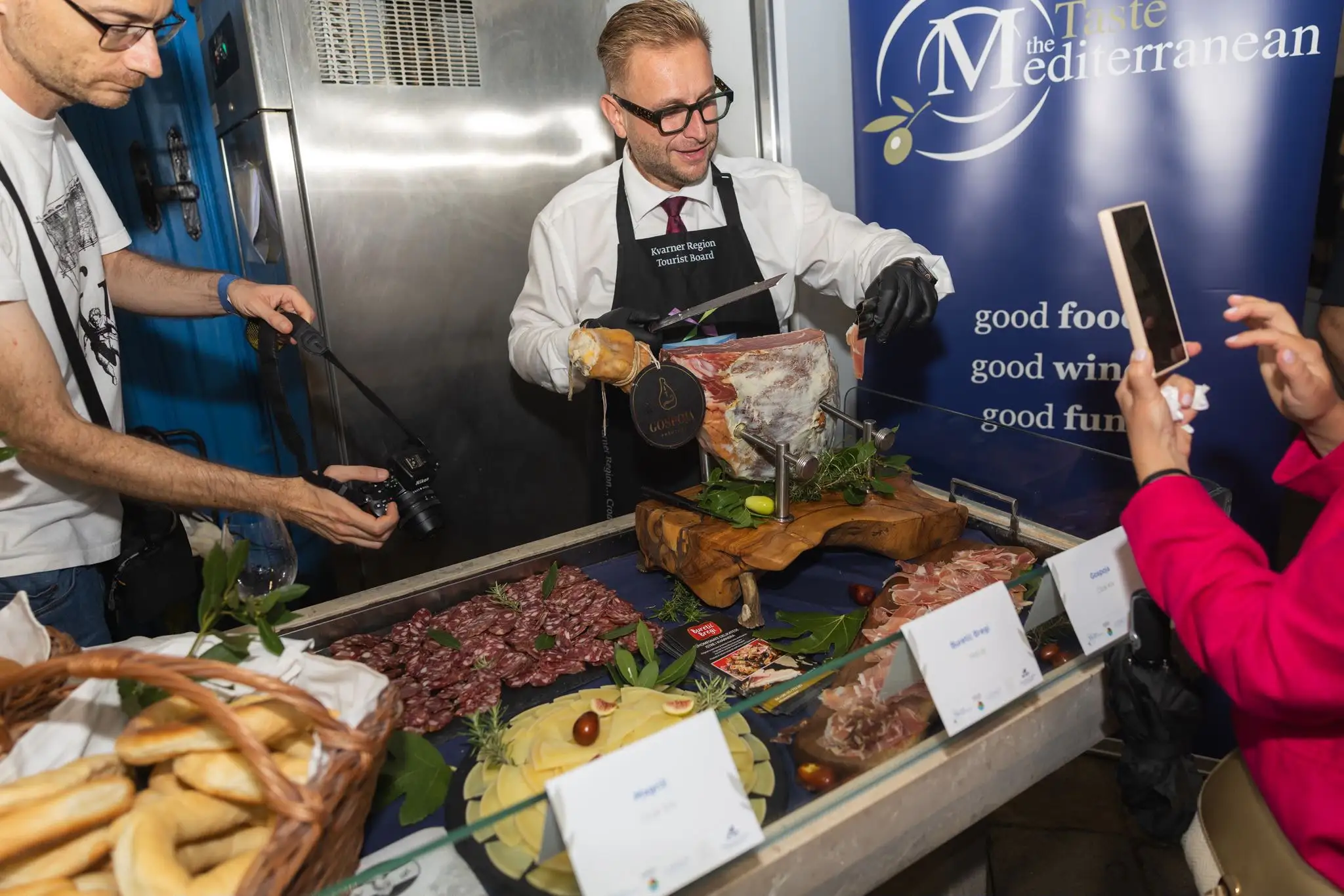
We are especially proud that we did not come to Lošinj with just wine. Along with the wines of our members, the products of our partners were presented: Sirana Magriž, Pršut Gospoja, Buretić Bregi, Bakarski baškot and Rabska torta. Cheese, prosciutto, cured meats, traditional baškot and Rabska torta, along with indigenous wines, together told a much stronger story than any one product could tell on its own.
This is exactly the model that Kvarner Wines wants to develop: not to promote wine in isolation from food, gastronomy separated from agriculture or producers separated from tourism, but to connect winemakers, local producers, restaurants, chefs, the tourism sector, events, distributors and institutions into one functional wine-gastronomy ecosystem.
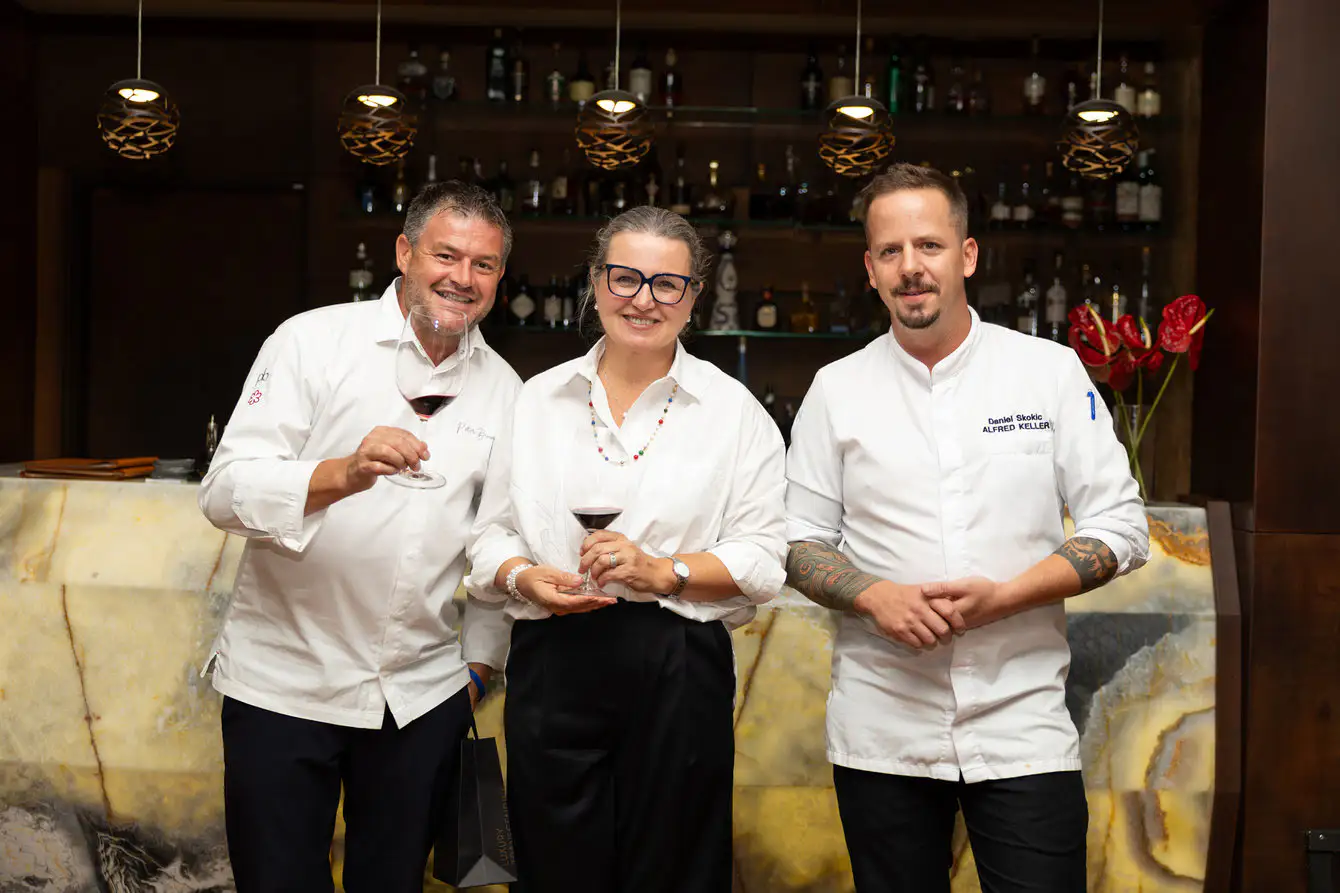
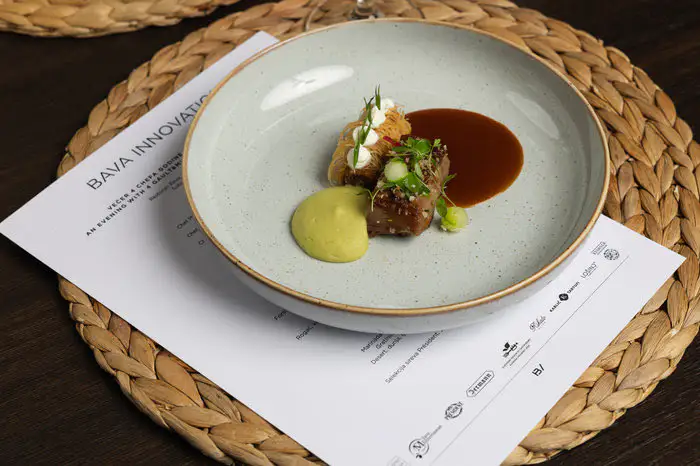
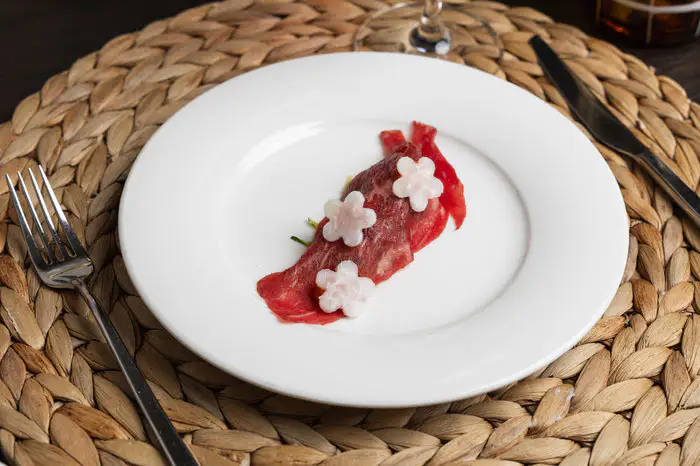
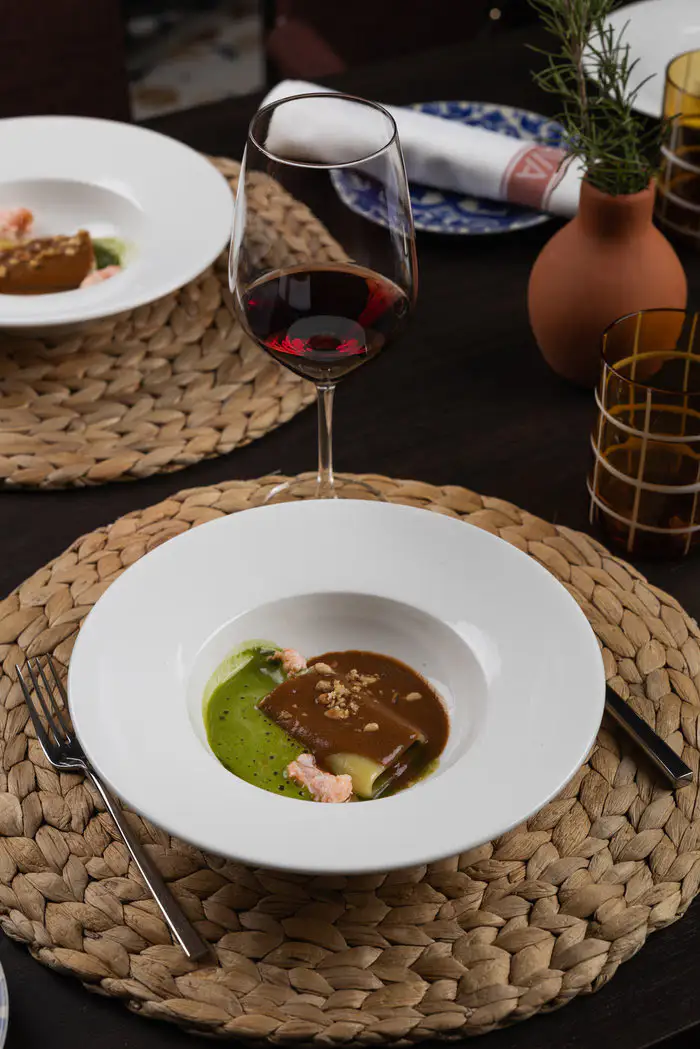
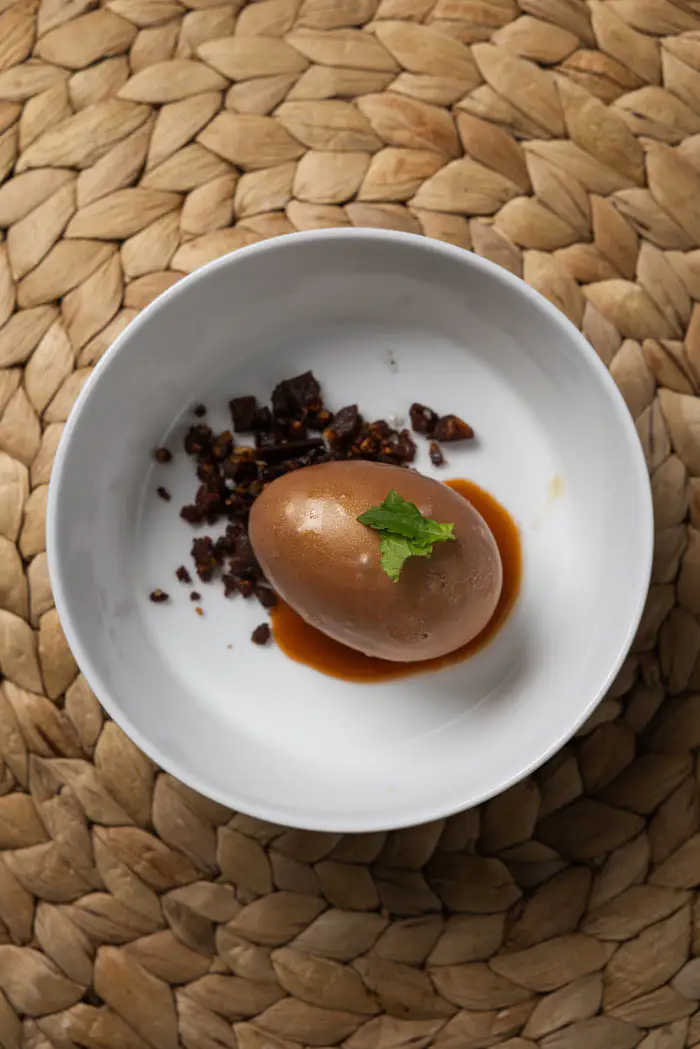
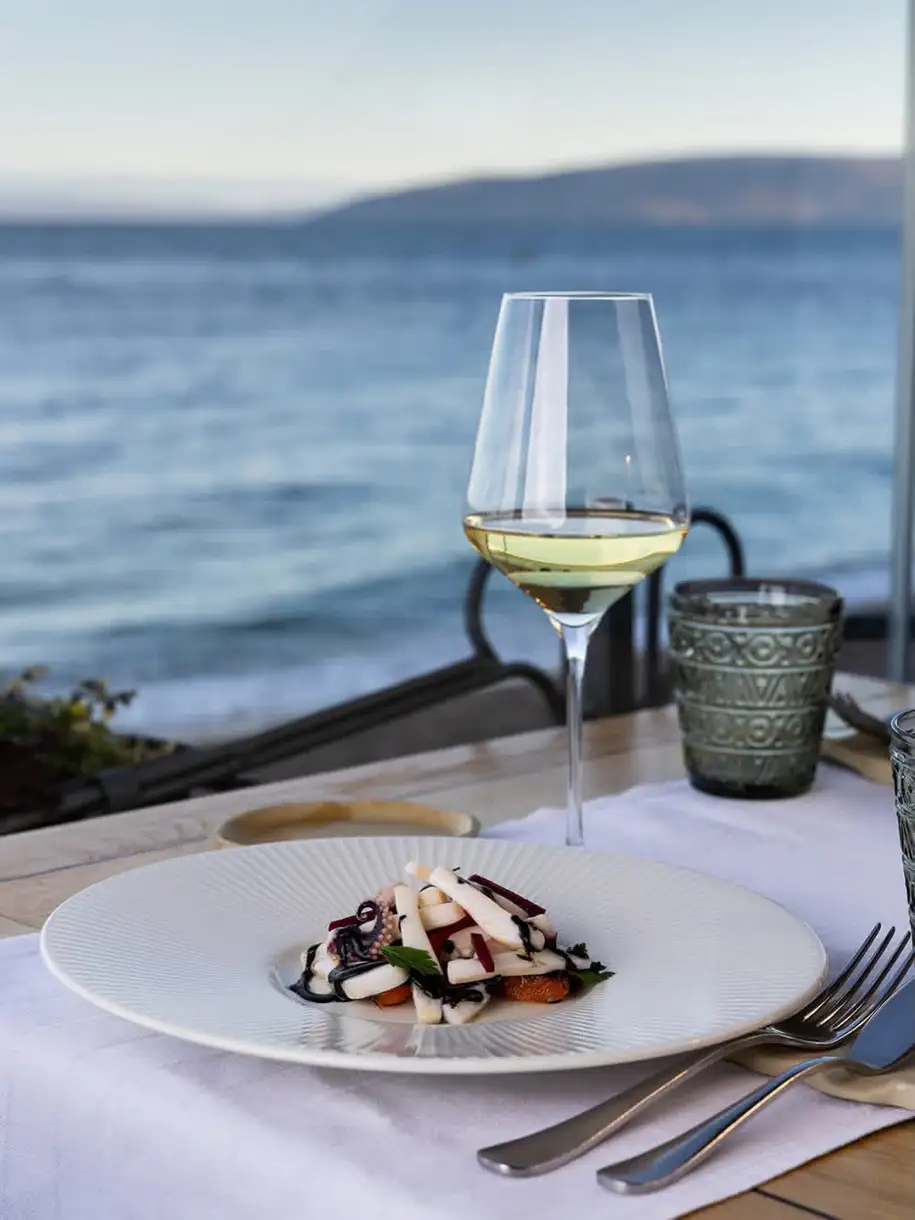
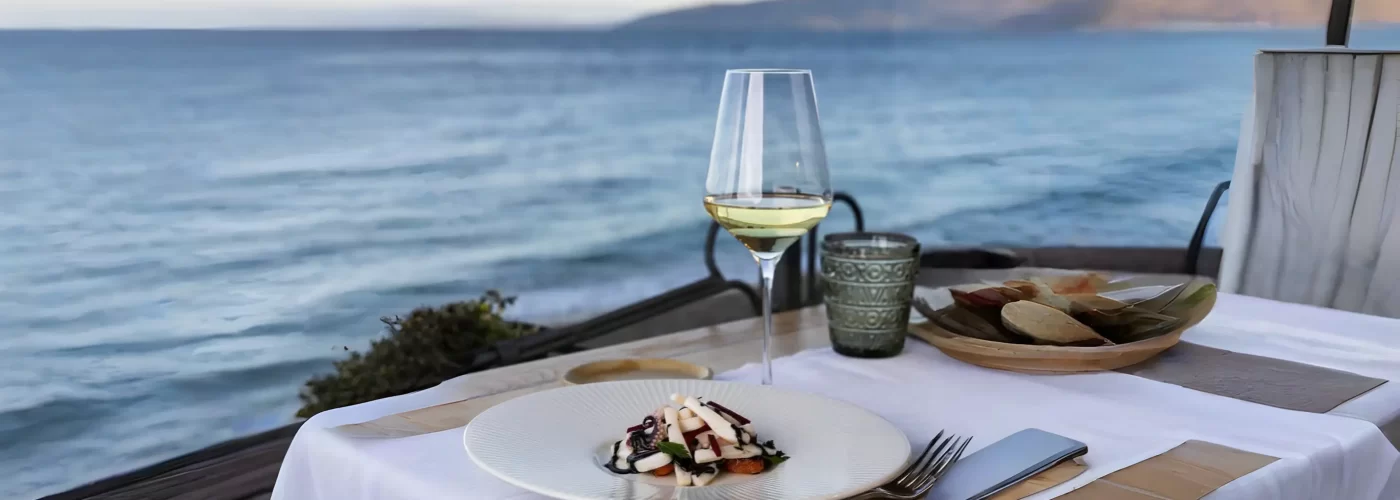
A special moment of the festival was an exclusive dinner at the Alfred Keller restaurant of the Alhambra Boutique Hotel. The dinner's signature cuisine was perfectly paired with three Kvarner wines: 1288 sparkling wine, Imolata and Sveti Ivan.
For Kvarner Wines, this context is important. Autochthonous and local should not be synonymous with simple. The best confirmation of the value of local wine is when it naturally sits alongside a plate of haute cuisine and participates equally in the overall dining experience.
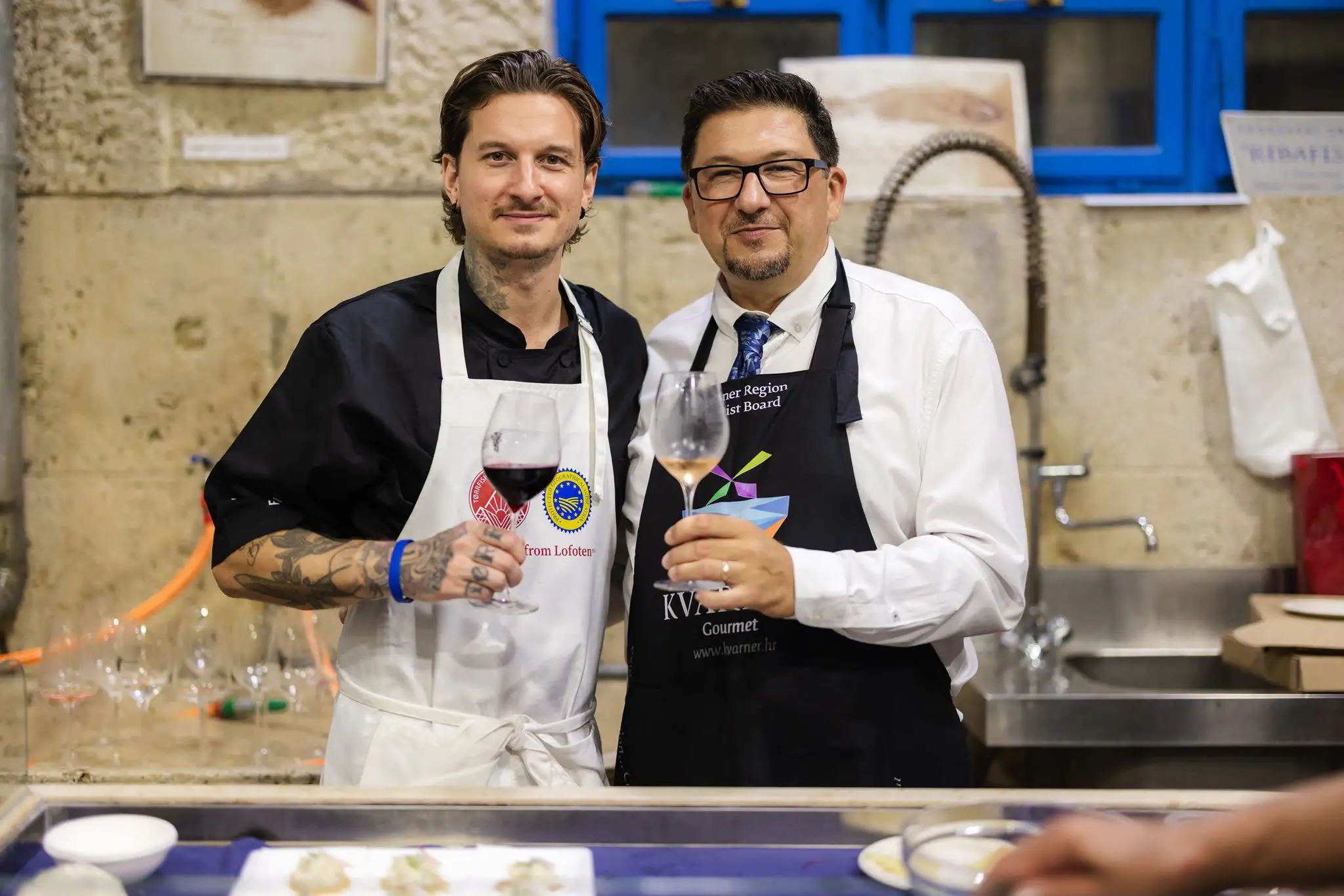
Taste the Mediterranean also showed how many valuable people Kvarner has in gastronomy. Stiven and Tea Vunić from Zijavica in Mošćenička Draga are an example of contemporary gastronomy that turns local origins into its greatest advantage.
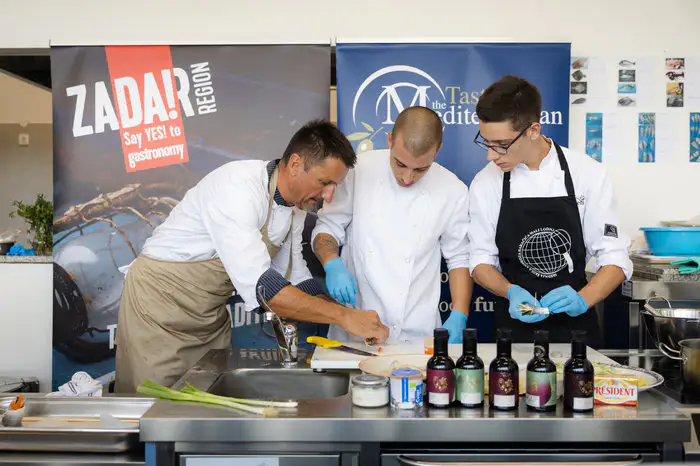
Stiven Vunić, Gault&Millau Croatia Chef of the Year 2026, held a masterclass for students of the Ambroz Haračić High School during the festival and showed how contemporary gastronomy can be built on local tradition, ingredients and one's own identity. The education of young people is particularly important because the future of Kvarner gastronomy will not depend only on today's awards, but on the knowledge we pass on to new generations.
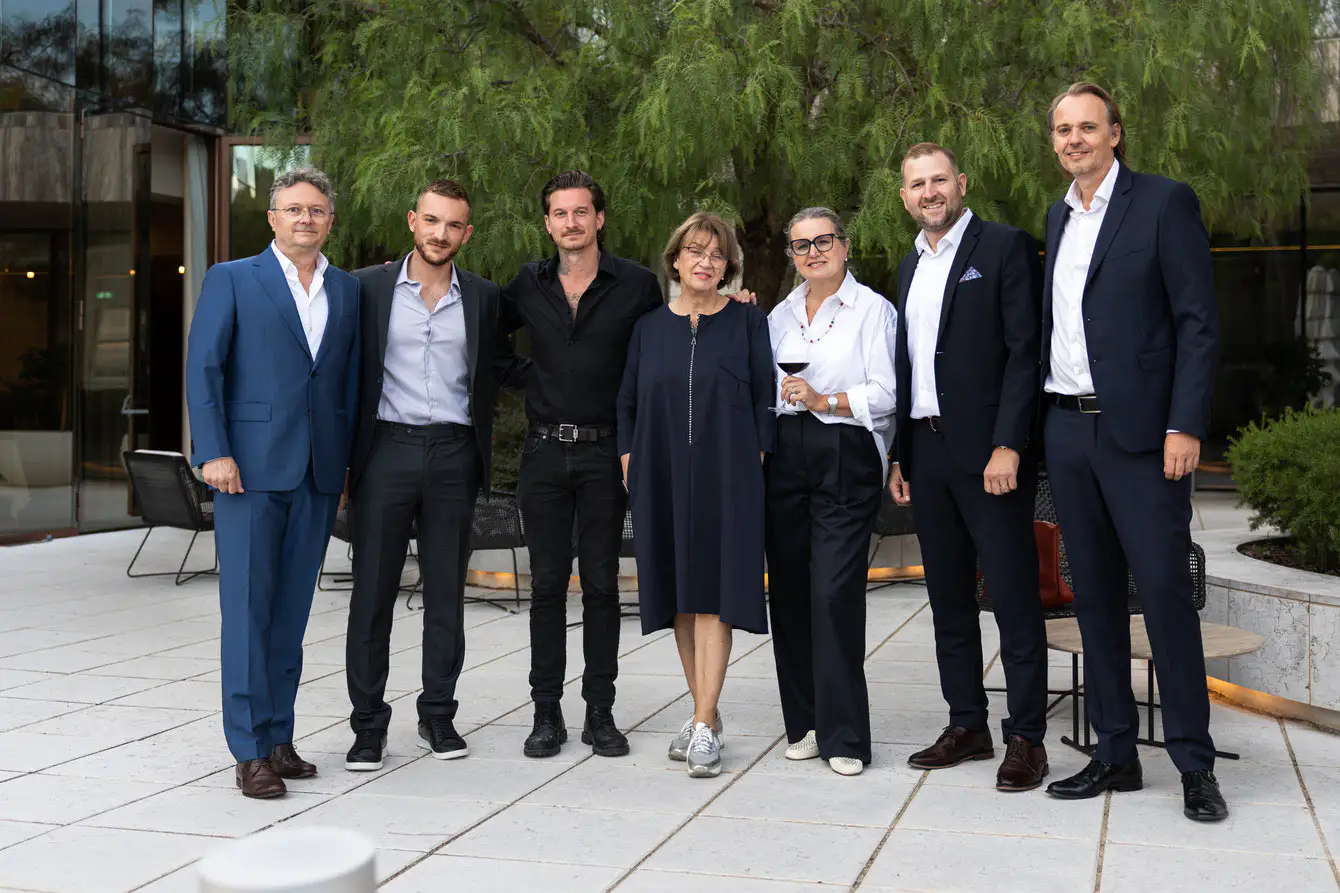
At the closing dinner at the Bellevue Hotel, the last four Croatian Gault&Millau Chefs of the year cooked together, including Stiven Vunić. Tea Vunić also participated alongside Stiven. Their work and consistency are the reason why we rightly consider them the pride of gastronomic Kvarner.
The festival also opened up the question of the future of tourism. Director of the Kvarner Wines Association and IGCAT Global Expert Dr. Žarko Stilin moderated the expert panel "Tourism 2027: challenges in my community".
The question is no longer just how many tourists will come, but what they will experience in the destination, what they will consume, how much local value will remain in the local economy, and whether we can turn food and wine into real motives for coming.
A large part of Kvarner Wines' projects are based on this: local wine in the restaurant, local producer included in the tourism value chain, autochthonous variety as a reason to come to the winery, gastronomy as a reason to visit outside the main season, and a wine route that connects producers, restaurants, heritage, events and tourist experiences.
Taste the Mediterranean was held in the year in which Kvarner holds the title of European Gastronomy Region 2026. After all that Kvarner has today, we no longer need to prove that we have gastronomy.
We have top chefs. We have serious restaurants. We have Kvarner shrimp. We have cheeses, prosciutto, olive oils, traditional products and desserts. We have Žlahtina, Sansigot, Trojišćina, Jarbola and Kastavska Belica. We have winemakers who win international awards. We have islands, sea, stone, vineyards and a strong Mediterranean identity.
Taste the Mediterranean showed something else: Kvarner is no longer just a host on the big gastronomic stage. Kvarner is content - and an authentic example of the Mediterranean Way of Life in which wine, food, people and space have a common identity.
The next step is not proving quality. The next step is connecting everything we have into an internationally recognizable Kvarner wine and gastronomy brand.
This is precisely where Kvarner Wines sees its role – to connect, open the market, create projects, raise standards, preserve authenticity and present it with modern marketing language.
Kvarner Wines – Taste the Kvarner Way.